

MANTHAN
Using participatory action research and theory of change to integrate depression care services at rural primary care clinics in India: A cluster-randomized controlled implementation-effectiveness study
Overview
MANTHAN study aims to develop and evaluate the effectiveness of a Participatory Action Research (PAR) and Theory of Change (Toc) informed Rural Primary Depression Care Implementation Model to integrate depression care into primary care settings.
Phase-1: We will engage rural community members, primary care staff, and health officials to understand perspectives on depression care through interviews, group discussions, and activities to inform a ‘theory of change’ workshop and a co-developed care model, refined through iterative community consultations.
Phase-2: The final implementation model will be evaluated through a cluster-randomized controlled trial with nine clinics deploying the model (with routine district team support) and nine ‘control’ clinics delivering depression care through routine district team support alone.
We will assess the effectiveness of the model by comparing depression case detection rates between study arms, which serves as the primary implementation outcome. Secondary implementation outcomes include the proportion of identified cases referred to clinic doctors, initiated on treatment, and followed up for continued care. The primary patient-level outcome will be depression remission at the 3-month follow-up, compared across arms. Additionally, we will conduct a cost analysis of the model’s development and delivery using the WHO’s health system building blocks framework. If proven effective, the model holds potential for scale-up across 1,200 primary health centres in Madhya Pradesh, supporting the government’s efforts to integrate mental health into primary care.
Rationale
Nearly 50 million people in India live with depression, yet over 90% go untreated. Although evidence-based interventions like WHO’s mhGAP exist, few have been effectively implemented in India’s rural clinics. Previous Sangath studies like PRIME and ESSENCE highlighted challenges, including human resource burdens, poor sustenance of care models, and limited involvement of rural community stakeholders. This study uses Participatory Action Research (PAR) to co-develop a scalable implementation model for rural primary depression care by meaningfully engaging community members and other stakeholders. Through participatory methods and a Theory of Change approach, the model will be refined and tested in a cluster-randomized trial to improve depression detection and treatment outcomes.
Partners
National Health Mission (NHM), Madhya Pradesh, India
Pravara Institute of Medical Sciences, Maharashtra, India
Harvard Medical School, USA
Project Investigators/Leads
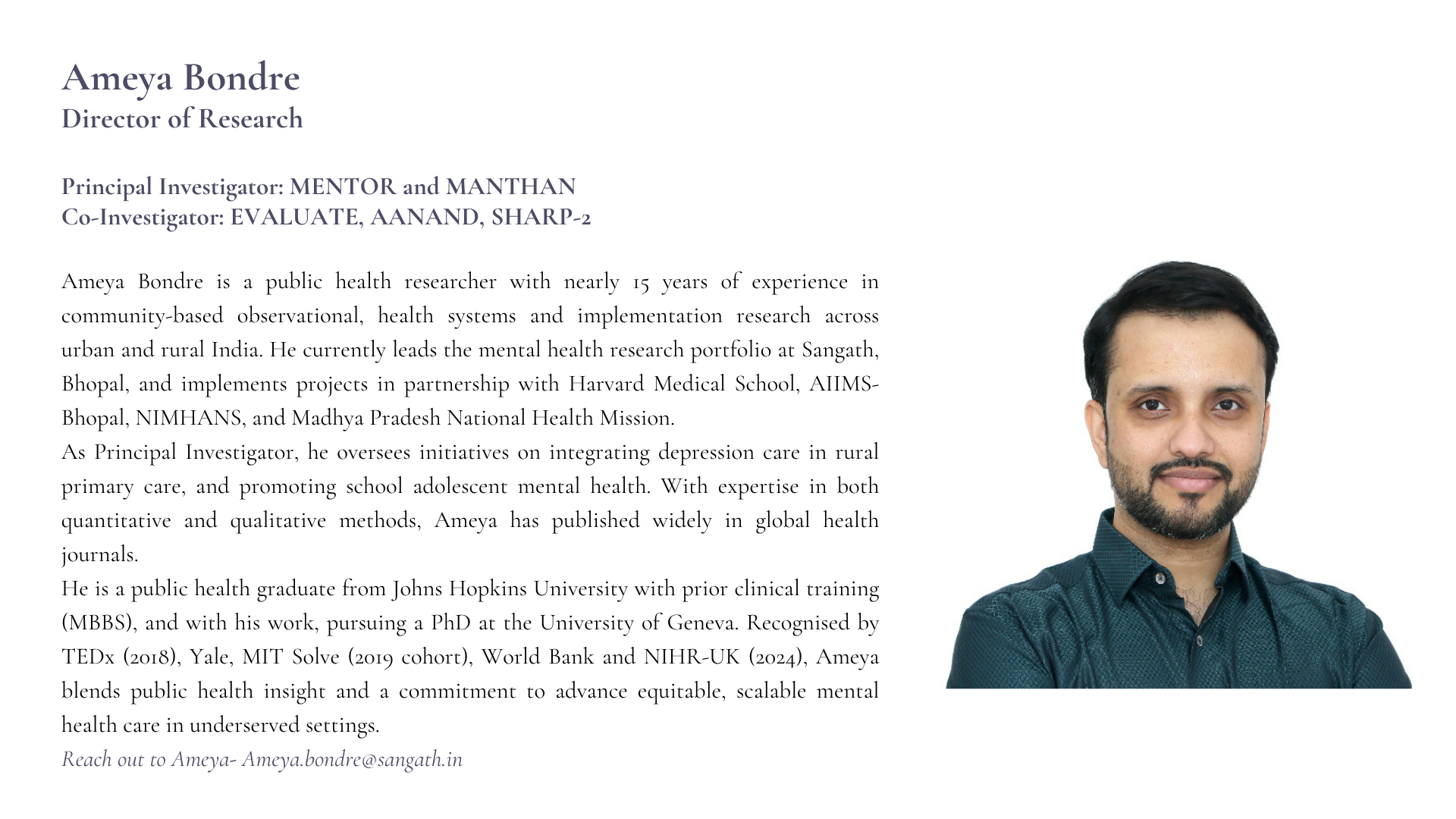
Dr. Ameya Bondre
Principal Investigator
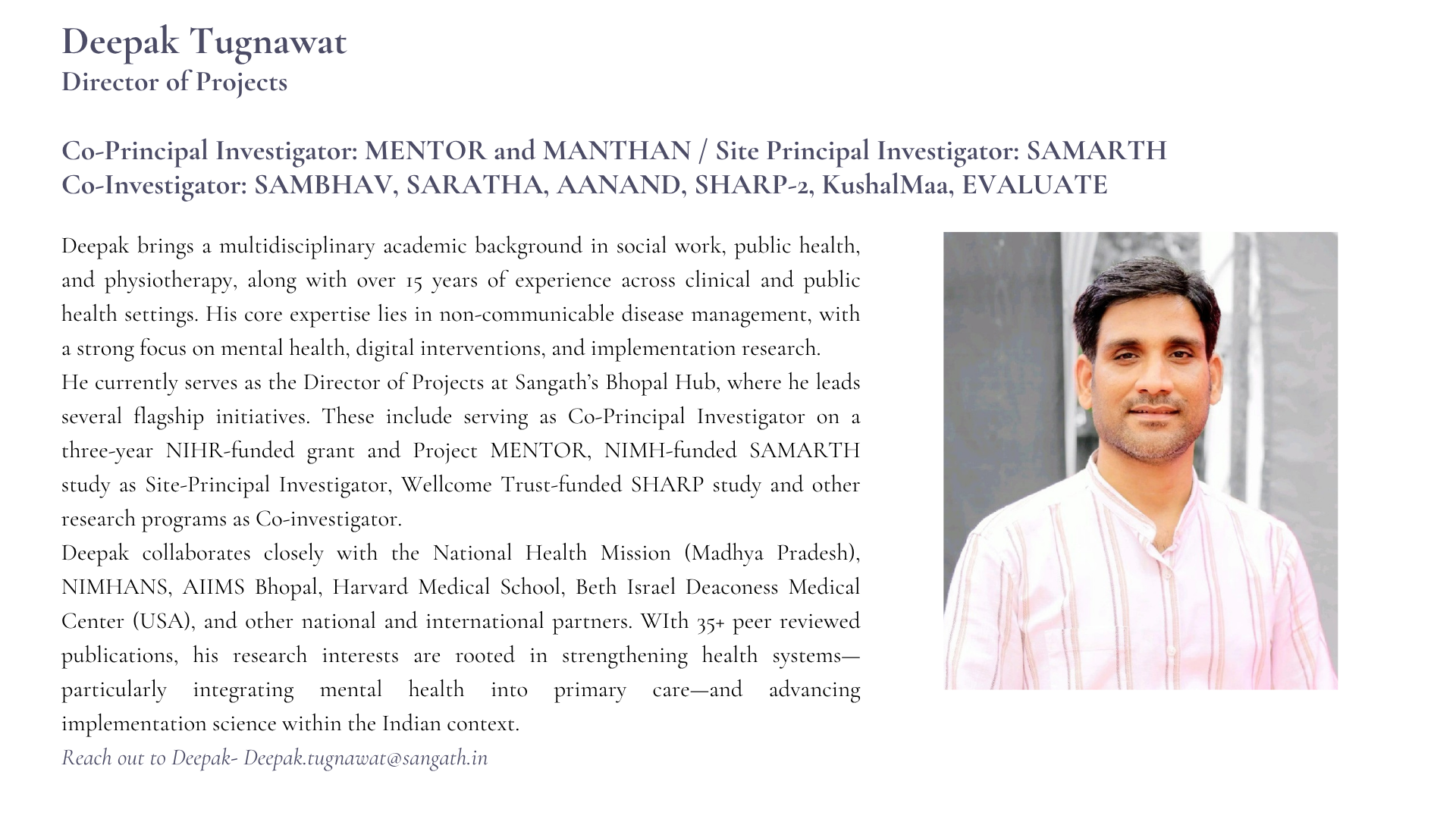
Deepak Tugnawat
Co- Principal Investigator

Dr. Azaz Khan
Co- Investigator
Dr. Anant Bhan
Co- Investigator

Funders
