top of page

PRIDE

Brief, scalable, early intervention in schools for emotional problems in adolescents

Overview


PRIDE (PRemIum for aDolEscents) is an adolescent mental health research program that was conducted in India, a country that is home to the largest number of adolescents in the world. The aims were to develop and evaluate a suite of psychosocial interventions targeting emotional problems in school-based adolescents.  PRIDE was implemented from 2016-2022 in low-income schools in the state of Goa and the national capital of New Delhi as a collaboration between the London School of Hygiene and Tropical Medicine and Harvard Medical School with Sangath, the primary implementation partner in India. 


Rationale


Anxiety, depression, and disruptive behaviours impact youth globally, yet there is scarce research on the effectiveness of interventions outside of high-income countries. Evidence-based interventions tested in controlled research trials may also be difficult to scale due to resource constraints and a narrow focus on specific mental disorders, even though mental health problems commonly co-occur and may not fit rigid diagnostic categories. This award looked to address these challenges by developing and evaluating a community-based transdiagnostic stepped care model (i.e., relevant to a variety of common emotional and behavioural problems), which could be delivered by non-experts in low-resource global contexts.


Partner/s


  • London School of Hygiene and Tropical Medicine, London, UK

  • Harvard Medical School, Boston, USA


Location

Goa and New Delhi, India

Duration

2016 - 2022

Project Investigators/Leads

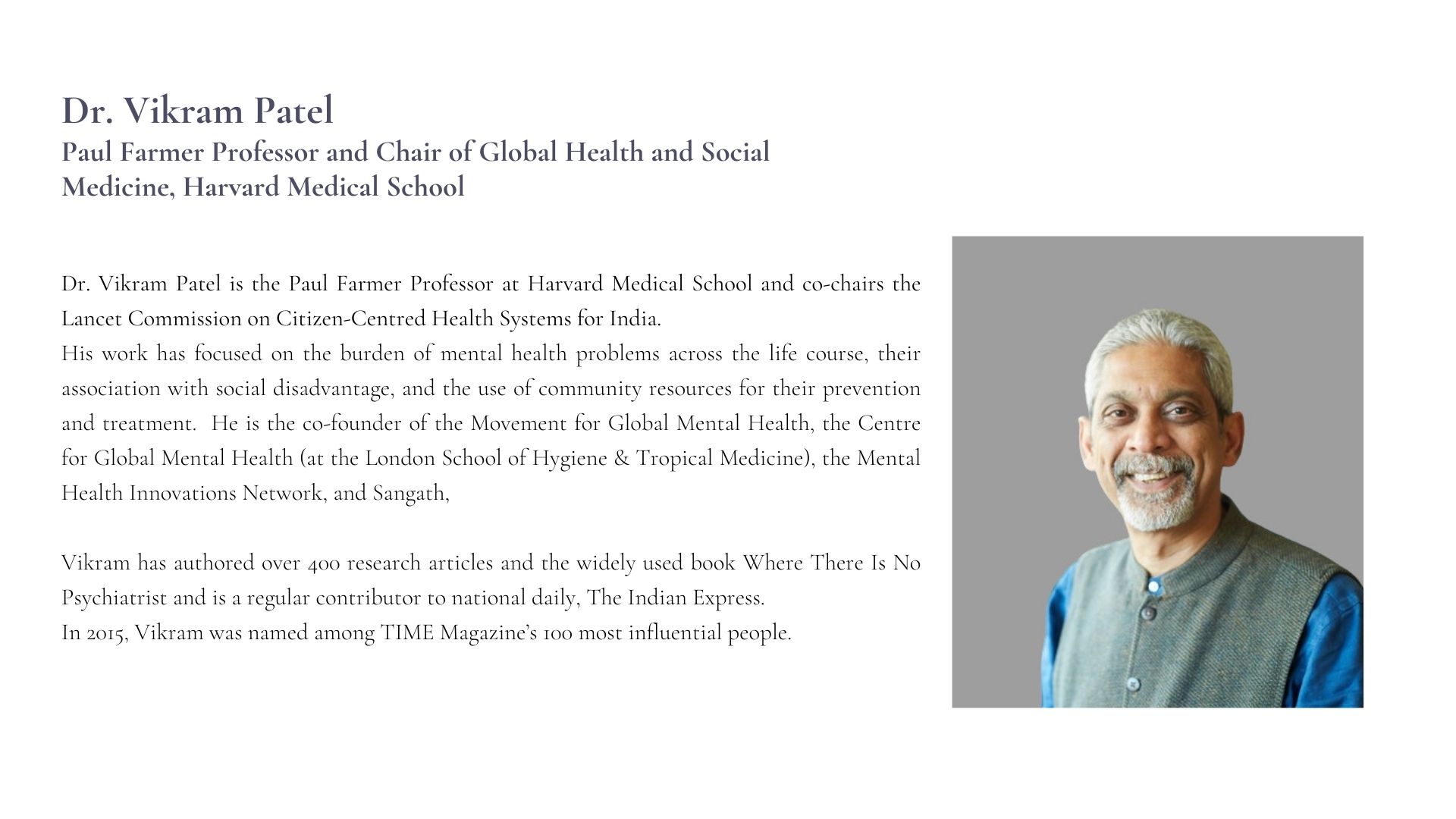
Prof. Vikram Patel

Co-Principal Investigator
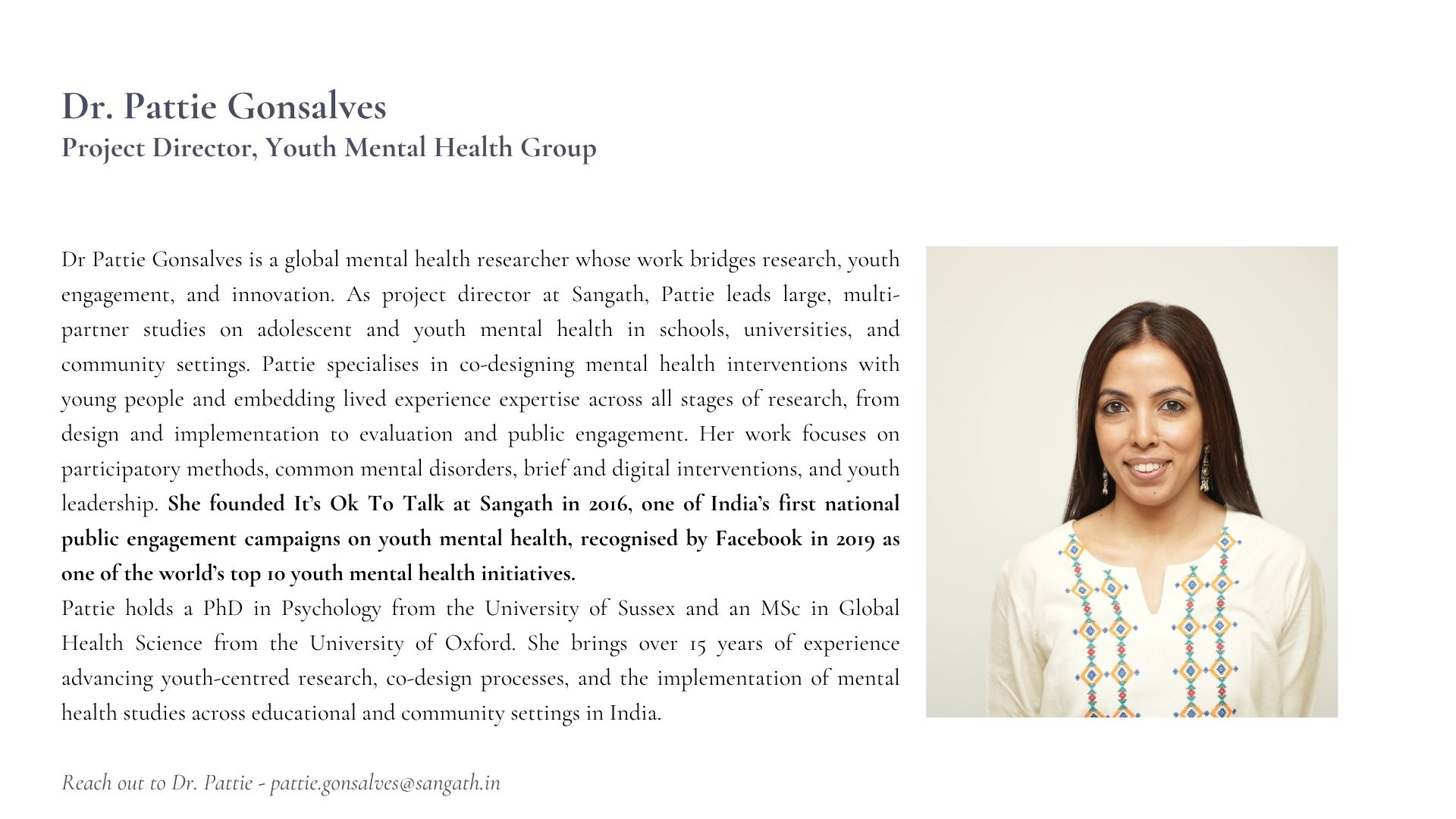
Pattie Gonsalves

Co- Principal Investigator

​

​

​

​

​

​

Funders

  1. Developing knowledge-based psychotherapeutic competencies in non-specialist providers: A pre-post study with a nested randomized controlled trial of a coach-supported versus self-guided digital training course for a problem-solving psychological intervention in India.

  2. Coach-supported versus self-guided digital training course for a problem-solving psychological intervention for non-specialists: Protocol for a pre- and poststudy nested randomized controlled trial.

  3. Pilot randomised controlled trial of a remotely delivered online intervention for adolescent mental health problems in India: Lessons learned about low acceptability and feasibility during the COVID-19 pandemic.

  4. A Guided Internet-Based Problem-Solving Intervention Delivered Through Smartphones for Secondary School Pupils During the COVID-19 Pandemic in India: Protocol for a Pilot Randomized Controlled Trial.

  5. “If there is a tension about something, I can solve it”: A qualitative investigation of change processes in a trial of brief problem-solving interventions for common adolescent mental health problems in India.

  6. Effectiveness and costs associated with a lay counselor–delivered, brief problem-solving mental health intervention for adolescents in urban, low-income schools in India: 12-month outcomes of a randomized controlled trial.

  7. Effectiveness of a brief lay counsellor-delivered, problem-solving intervention for adolescent mental health problems in urban, low-income schools in India: a randomised controlled trial.

  8. Priorities and preferences for school-based mental health services in India: a multi-stakeholder study with adolescents, parents, school staff, and mental health providers.

  9. Increasing demand for school counselling through a lay counsellor-delivered classroom sensitisation intervention: a stepped-wedge cluster randomised controlled trial in New Delhi, India.

  10. Feasibility and Acceptability of a Remote Stepped Care Mental Health Programme for Adolescents during the COVID-19 Pandemic in India.

  11. A qualitative analysis of collaborative efforts to build a school-based intervention for multiple common adolescent mental health difficulties in India.

  12. Development of a transdiagnostic stepped care programme for common adolescent mental health problems in Indian secondary schools: lessons from a pilot study examining acceptability and feasibility.

  13. A pilot study to evaluate feasibility and acceptability of training mental health workers in India to select case-specific intervention procedures within a dynamic modular treatment designed for a low-resource setting.

  14. App-based guided problem-solving intervention for adolescent mental health: a pilot cohort study in Indian schools.

  15. Design process and protocol description for a multi-problem mental health intervention within a stepped care approach for adolescents in India.

  16. Design and Development of the “POD Adventures” Smartphone Game: A Blended Problem-Solving Intervention for Adolescent Mental Health in India.

  17. Development of a transdiagnostic stepped care programme for common adolescent mental health problems in Indian secondary schools: lessons from a pilot study examining acceptability and feasibility.

  18. Priorities and preferences for school-based mental health services in India: a multi-stakeholder study with adolescents, parents, school staff, and mental health providers.

  19. “It is like a mind attack”: stress and coping among urban school-going adolescents in India.

  20. India’s response to adolescent mental health: a policy review and stakeholder analysis.

  21. MBI face-face delivery manual - Hindi (Interactive)_PRIDE

  22. MBI face-face delivery manual_English_PRIDE

  23. POD Adventures App Manual - Hindi (Interactive)

  24. POD Adventures App Manual_English

  25. Problem Solving Counselling Manual - Hindi (Interactive)_PRIDE

  26. Problem Solving Counselling Manual_English_PRIDE

  27. Stress and Problem Solving Programme Sensitization Manual - Hindi (Interactive)_PRIDE

  28. Stress and Problem Solving Programme Sensitization Manual_English_PRID

  29. POD Manual_English_PRIDE

  30. POD Manual_Hindi_PRIDE

bottom of page