

OptimizeD
Improving outcomes in depression in primary care in a low-resource setting.
Overview
The OptimizeD study aims to improve outcomes in depression in primary care in India. As part of this study, we have randomized 1509 patients with moderate to severe depression to either psychotherapy based on behavioral activation called the Healthy Activity Program (HAP) or antidepressant medication (fluoxetine). The main objective of the OptimizeD study is to determine whether different patients respond differentially to HAP or fluoxetine and, if so, whether we can optimize outcomes in a cost-effective fashion for primary care patients with moderate to severe depression. Participants are followed up for 1 year to monitor their symptoms and assess their progress.
Rationale
India bears a significant portion, 50 million, of the global 258 million depression cases, a leading cause of disability. The Global Burden of Disease Study highlights its immense impact, with 917 DALYs per 100,000 annually, persisting since 1990. An alarming treatment gap of 83% exacerbates India's mental health crisis, especially in states like Madhya Pradesh, where depression prevalence is 4.18%. A randomized control trial integrating Health Activity Program and antidepressant medication, alongside genomic insights, offers promise. By understanding individual characteristics, a precision treatment approach aims to bridge the gap and offer hope amidst adversity.
Partner/s
National Health Mission (NHM), Madhya Pradesh, India,
AIIMS, Bhopal
Project Investigators/Leads
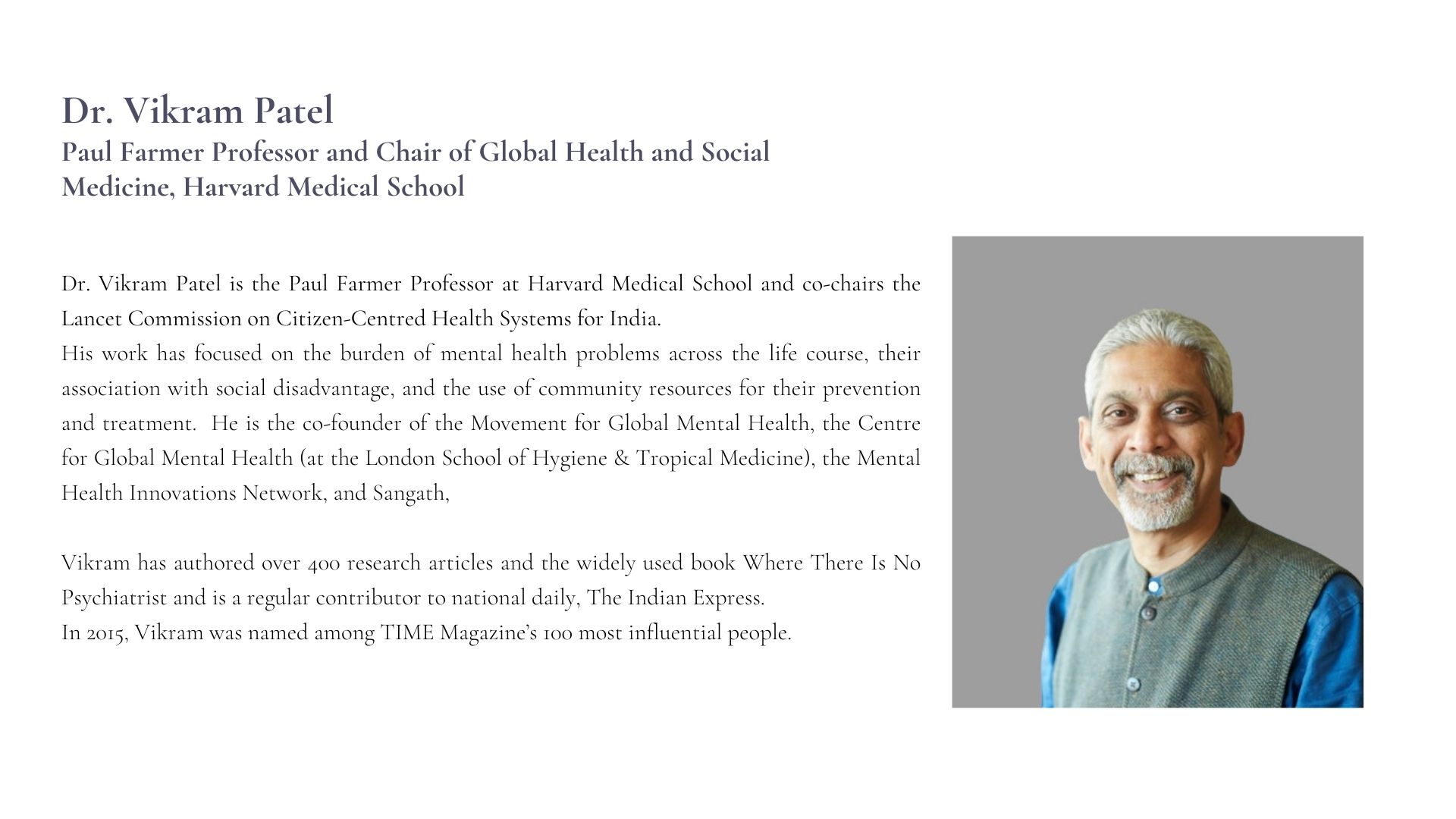
Dr. Vikram Patel
Co-Principal Investigator

Prof. Steven Hollon, PhD
Co-Principal Investigator
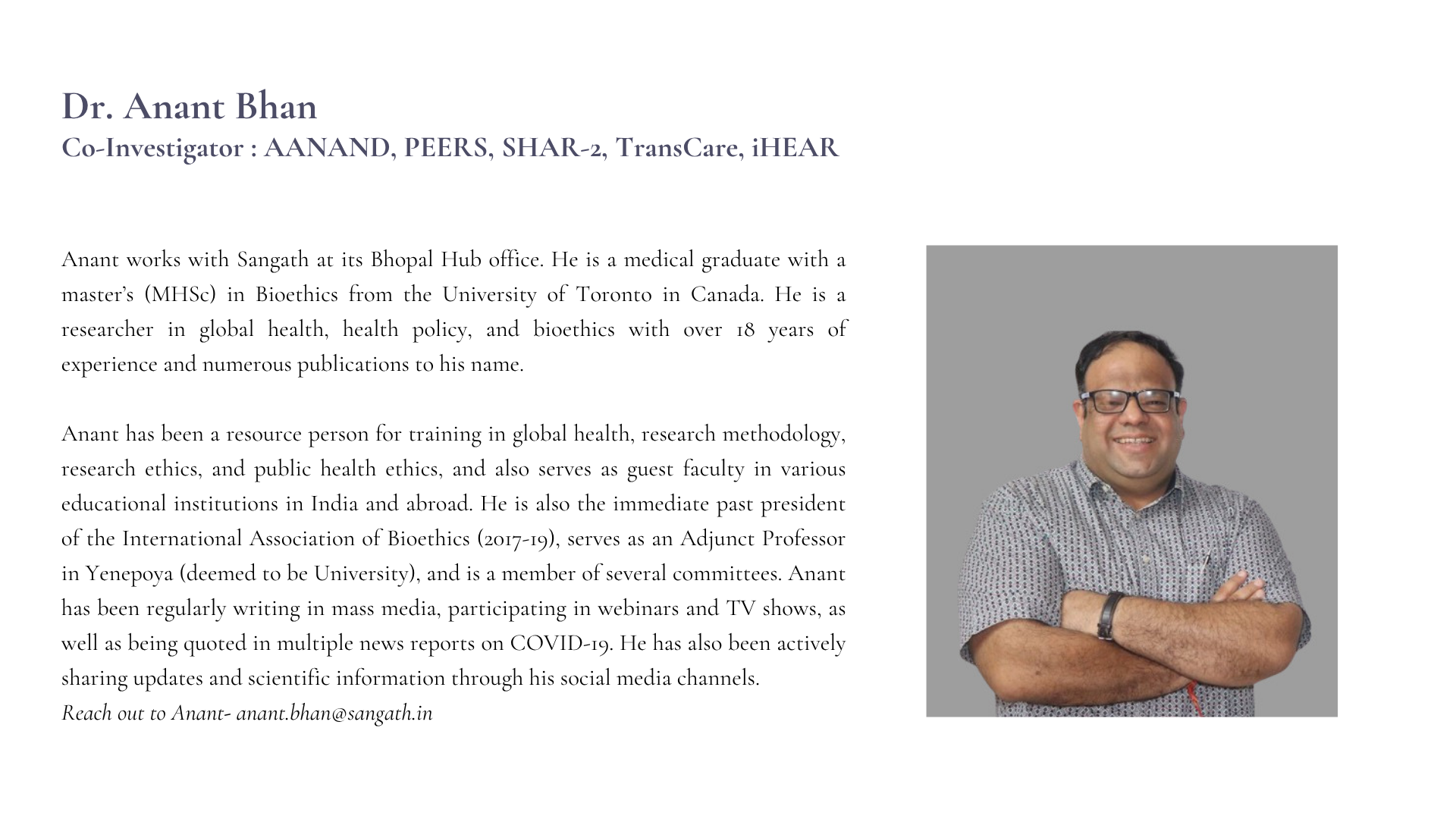
Dr. Anant Bhan
Site Principal Investigaor

Dr. Debasis Biswas
Site Principal Investigaor
Funders

Healthy Activity Program (HAP) is a brief structured psychological intervention developed by Sangath in partnership with The London School of Hygiene & Tropical Medicine (LSHTM) and Directorate of Health Services, Goa in 2017. It is grounded in 'Behavioural Activation', one of the most evidence-backed approaches for treating depression, recommended by the World Health Organization.
From India to Nepal, Uganda to the United States, HAP has been adapted across cultures; an example of innovation travelling both ways, including into high-resource contexts.
HAP reminds us that effective care doesn’t always need to be complex, it needs to be reachable, relatable, and rooted in people’s everyday lives.