

COINCIDE
Nutritional, psychosocial, and environmental determinants of Neurodevelopment and Child Mental Health
Overview
COINCIDE study is a prospective cohort study embedded within two existing birth cohorts located in urban South India (Bengaluru, Karnataka) and rural North India (Rewari, Haryana). The primary aim of the COINCIDE study is to examine the independent, interactive, and cumulative effects of nutritional, psychosocial, and environmental factors on children's cognitive development and mental health across urban and rural settings. Additionally, it seeks to explore the pathways contributing to inequities in child outcomes at individual, household, and neighbourhood levels through in-depth qualitative research.
Rationale
Nutrition, psychosocial and toxic environmental exposures impact neurodevelopment and child mental health to varying degrees depending on their nature, timing and extent of exposure. Also, these determinants are influenced by various socioeconomic factors at the individual and household levels. Children from low and middle-income countries are more likely to be exposed to a variety of developmental risk factors compared to high-income countries. While there is limited evidence on the additive and interaction effects of nutritional and psychosocial exposures on neurodevelopmental outcomes, as well as evidence on the moderating effects of enriched environments on adverse effects of environmental pollutants exposure, evaluating the impact of the combination of nutritional, psychosocial and environmental factors on neurodevelopment and child mental health outcomes across the first decade of life has never been attempted in developing countries like India.
The COINCIDE project with the multidisciplinary team is well-positioned to address this research gap through the combined expertise, skills, resources of multi-institutional expert groups and the use of established research infrastructure and innovative methodological contributions.
Evidence from COINCIDE research will inform a theory of change (TOC) – an evidence-based theoretical model of the biological, social, cultural and economic origins of neurodevelopmental and mental health impairments. This TOC will help develop guidelines for a multicomponent intervention for first decade of life (Pregnancy-9 years), that is tailored for two geographically and culturally distinct communities, by highlighting important intervention targets and their sensitive periods.
Partners
Institute of Public Health (IPH), Bengalure
Indian Institute of Public Health (IIPH), Bangalore
Public Health Foundation India (PHFI), Delhi
Ashoka University, Sonipath, Haryana
St John Research Institute (SJRI), Bangalore
Location
Rewari District, Haryana and Urban Bengaluru, Karnataka
Duration
2021 - Ongoing
Contact
Project Investigators/Leads

Prof Dr Prashanth Srinivas
Lead Investigator

Dr. Gauri Divan
Co- Principle Investigator
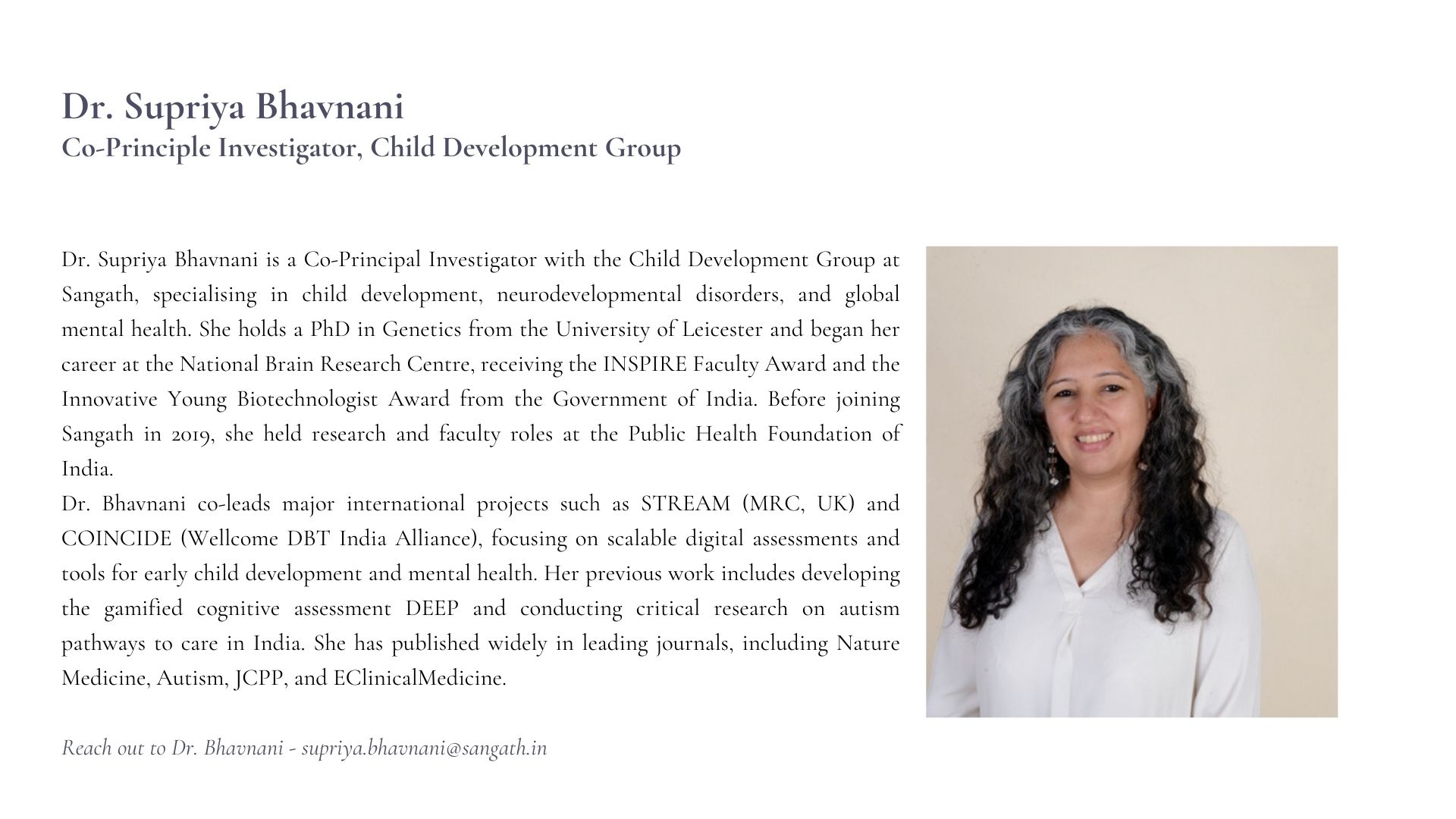
Dr. Supriya Bhavnani
Co- Principle Investigator

Funders
